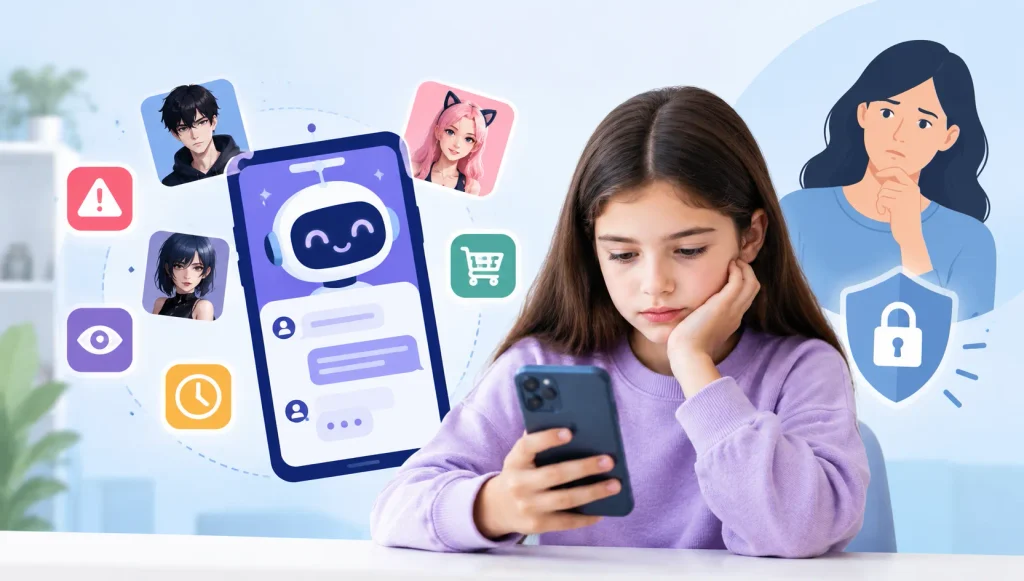




If your child melts down when you take away their phone, sleeps with it under their pillow, and seems to lose track of time on it for hours — you’re not imagining things. Phone addiction in kids is real, measurable, and growing fast. Pew Research’s December 2024 survey found that nearly half of U.S. teens are now online “almost constantly” — nearly double the share from a decade ago — and 95% have access to a smartphone.
The hard part for parents isn’t recognizing that something’s wrong. It’s knowing where the line is between “normal teen phone use” and a genuine behavioral problem that needs intervention. This guide walks through the 10 clinical warning signs, what the brain science actually says, and a step-by-step plan to help your child build a healthier relationship with their device — without starting World War III at the dinner table.
95% of U.S. teens ages 13–17 have access to a smartphone, and nearly half say they’re online “almost constantly” — up from just 24% a decade earlier.
Source: Pew Research Center, Teens, Social Media and Technology 2024 (published December 2024)
Is Phone Addiction in Children Actually Real?
Yes — though the clinical name varies. The World Health Organization formally recognizes “Gaming Disorder” in the ICD-11, and researchers increasingly use the term “Problematic Smartphone Use” (PSU) to describe compulsive phone behavior that interferes with daily life.
A long-running study published in JAMA Pediatrics tracking nearly 4,000 adolescents over four years found that increased social media and television use was significantly linked to higher symptoms of depression. The American Psychological Association’s 2023 Health Advisory on Social Media Use formally warns parents that adolescents’ developing brains are uniquely vulnerable to the design features that make social platforms hard to put down.
The U.S. Surgeon General also issued a 2023 advisory citing social media use as a “profound risk” to youth mental health. So when your gut tells you something’s off — listen. The research backs you up.
10 Signs Your Child is Addicted to Their Phone
One sign on its own isn’t necessarily a problem. But if you’re nodding along to four or more of these, your child has likely crossed from “heavy user” into addictive behavior territory.
1. They Can’t Stop, Even When They Want To
Your child sets their own goal — “Just 15 minutes” — and consistently blows past it. They’ve tried to cut back and failed. This loss of control is the single clearest behavioral marker of any addiction, including phone use.
2. Withdrawal Symptoms When the Phone is Taken Away
Irritability. Anxiety. Anger that seems wildly disproportionate. If your child becomes physically distressed — not just annoyed — when separated from their phone, their brain is showing the same withdrawal pattern researchers document with substance dependencies.
3. Sneaking the Phone at Night or in Forbidden Times
Hiding the phone under pillows, sneaking it into the bathroom, using it after agreed-upon bedtimes. Common Sense Media’s 2023 “Constant Companion” report documented that teens’ phones are “buzzing almost constantly,” day and night — and that overnight phone use is one of the strongest disrupters of teen sleep. Sneaking signals that phone access has become a need, not a choice. Many kids also hide their use behind disguised apps — we cover them in 16 Secret Apps Kids Use to Hide Things from Parents.
4. Loss of Interest in Hobbies and Friends They Used to Love
The soccer they begged to play for years now feels “boring.” The best friend they used to bike to every weekend gets replaced by Snapchat streaks. When the phone displaces real-world activities a child genuinely enjoyed, that’s a red flag — not just a phase.
5. Sleep Disruption
Trouble falling asleep, waking up exhausted, falling asleep in class. The blue light is part of the problem, but the bigger issue is dopamine — late-night scrolling keeps the brain in alert mode for hours. The American Academy of Pediatrics recommends no screens in the hour before bed and none in the bedroom overnight.
6. Declining Grades or Attention Problems at School
Teachers report homework not turned in. Test scores slipping. Trouble focusing on tasks longer than a TikTok. Heavy phone use rewires attention spans, and the academic impact often shows up months before parents connect the dots.
7. Lying About How Much Time They Spend on the Phone
“I was only on for 20 minutes” — when Screen Time says three hours. Lying about phone use is one of the most reliable signs that the relationship has become unhealthy. Kids who feel in control of their use don’t feel the need to hide it.
8. Mood Swings Tied to the Phone
Happy and engaged when on it. Sullen, snappy, or anxious when not. If your child’s emotional state visibly tracks their device access, the phone is regulating their mood — a hallmark of behavioral dependency.Happy and engaged when on it. Sullen, snappy, or anxious when not. If your child’s emotional state visibly tracks their device access, the phone is regulating their mood — a hallmark of behavioral dependency.
9. Phantom Vibrations and Compulsive Checking
They feel the phone “buzz” when it didn’t. They unlock the screen dozens of times an hour without a notification. Psychology Today notes that these compulsive “checking habits” are among the earliest behaviors in problematic internet and phone use, and they engage the same reward circuitry researchers see in other behavioral addictions like gambling.
10. Physical Symptoms
“Tech neck” pain. Eye strain and frequent headaches. Sore thumbs or “texting wrist.” Skipping meals to keep playing or scrolling. Physical symptoms confirm that phone use has crossed from a habit into something the body is paying a price for.
The Science: Why Phones Are So Addictive for Developing Brains
It’s not your child’s fault. And it’s not bad parenting. Smartphones are engineered to be habit-forming — and the developing adolescent brain is especially vulnerable to the design.
Dopamine on Demand
Every notification, like, or new TikTok delivers a small dopamine hit. The unpredictability of when the next reward arrives — known as a variable reward schedule — is the same psychological mechanism slot machines use, and it’s the most addictive reward pattern known to neuroscience.
An Underdeveloped “Brake Pedal”
The prefrontal cortex — the part of the brain responsible for impulse control and weighing long-term consequences — is one of the last parts of the brain to mature, and according to the National Institute of Mental Health, the brain isn’t finished developing until the mid-to-late 20s. So when a 12-year-old’s reward system is screaming “more,” their brake system isn’t strong enough yet to push back. That’s biology, not character.
Designed by Behavioral Scientists
Major social platforms employ teams of engineers and psychologists whose job is to maximize “time on app.” Infinite scroll, autoplay, streaks, and red notification badges aren’t accidents — they’re the product of A/B testing on millions of users to find what’s most compelling. Adults struggle to resist these design patterns. Kids stand almost no chance unaided. The psychological pull is even stronger for children — we cover why in Top 5 Reasons Social Media Apps Are So Addictive to Kids.
The mental health connection
The U.S. Surgeon General’s 2023 advisory cites a growing body of research linking heavy social media use among adolescents to higher rates of anxiety, depression, and other mental health concerns — particularly when daily use exceeds three hours. Phone addiction isn’t just a screen-time issue — it’s a mental health issue.

Age-by-Age Warning Signs
| Age Group | Concerning Daily Use | Most Common Red Flags |
|---|---|---|
| 5–8 years | Over 1 hour recreational | Tantrums when device removed, refusing real-world play, requesting screens first thing in the morning |
| 9–12 years (tweens) | Over 2 hours recreational | Sneaking devices, secrecy, declining homework quality, sleep loss, social withdrawal from in-person friends |
| 13–15 years | Over 4 hours recreational | Anxiety when offline, body image issues, falling grades, lying about screen time, late-night use |
| 16–18 years | Over 5 hours recreational | Inability to study without checking phone, social anxiety in person, sleep deprivation, depressive symptoms |
“Recreational” excludes school-required screen time. These thresholds are guideposts informed by published research from the American Academy of Pediatrics and Common Sense Media — neither organization sets hour-by-hour caps for school-age children (AAP advises “consistent limits” chosen by each family). Treat the numbers above as flags for a closer look, not hard rules. Context matters more than the clock.
What to Do: The 8-Step Recovery Plan
Here’s the most important truth every parent needs to hear: punishment alone almost never works. Cold-turkey phone confiscation typically backfires — kids hide use, sneak devices, or rebel harder. What works is a structured, gradual reset. Here’s the plan, in order.
Step 1: Have an Honest, Non-Judgmental Conversation
Pick a calm moment, not a flashpoint. Tell your child you’ve noticed some changes you’re worried about, and you want to work on this together. Frame it as a shared problem, not a behavior they’re being punished for. The single biggest predictor of success is whether the child feels like a partner in the plan or a target of it.
Step 2: Track Current Use Honestly
Before you can change behavior, you need data. Have your child check their iPhone Screen Time or Android Digital Wellbeing report and write down the actual numbers — total time, top apps, pickup count. Most kids (and parents) are stunned. KidsNanny’s Screen Time tracking gives you accurate, app-by-app reports with daily, weekly, and monthly breakdowns — so you see the real numbers, not the ones your child remembers.
Step 3: Set Phone-Free Zones and Times
Pick three non-negotiables to start:
- The bedroom is phone-free at night. Phones charge in the kitchen or living room — not the bedroom. This single change improves sleep within a week.
- Mealtimes are phone-free. For everyone, including parents. Modeling matters more than rules.
- The first hour after school is for snacks, decompression, or movement — not the phone.
Step 4: Replace Screen Time, Don’t Just Remove It
The goal isn’t a teenager staring blankly at the wall — it’s a teenager doing something else. The best replacements are activities that deliver some of the same rewards the phone provides: social connection (sports, friends in person), mastery (a hobby or skill), or movement (anything physical). Don’t decide for them. Hand them a list of options and let them pick. For practical strategies that pair with this step, see our guide on how to effectively manage and reduce your child’s screen time.
Step 5: Use Built-In Limits — Then Layer Real Tools
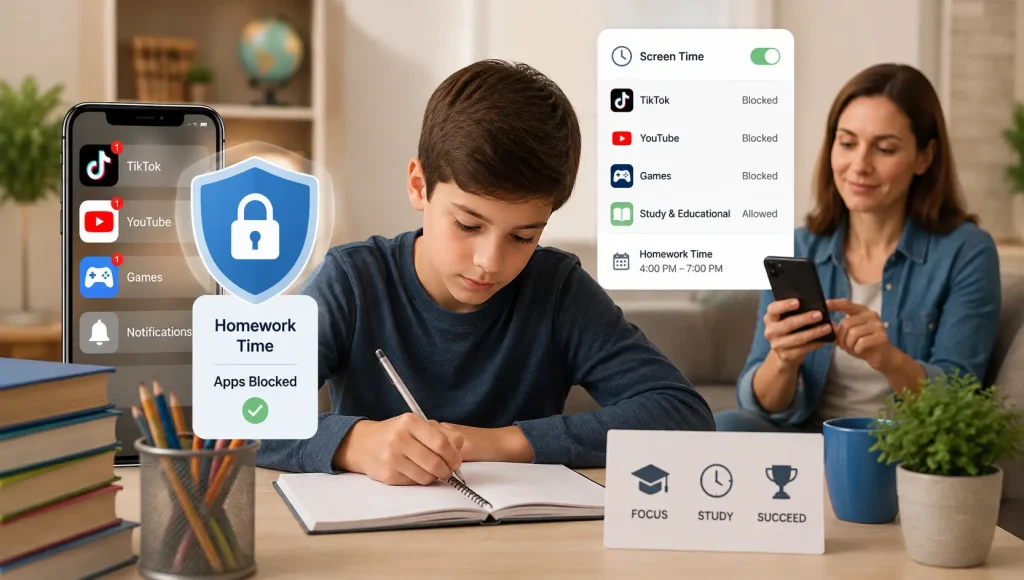
Apple’s Screen Time and Google’s Family Link give you basic time limits, but kids find workarounds within days — fake screen recordings, second accounts, or just learning the parent passcode. Parental control apps designed for the job are far harder to bypass. KidsNanny’s App Blocking lets you restrict apps and entire categories on a schedule, and our AI Screen Scanner automatically reviews screenshots for explicit and age-inappropriate content so you spot problems early.
Step 6: Tackle the Algorithms Driving the Compulsion
If your child is on TikTok, Instagram Reels, or YouTube Shorts, the algorithm is doing the addictive work. Help them clean it up: unfollow accounts that make them feel worse, use “not interested” aggressively, and build in deliberate breaks. TikTok in particular has a powerful pull on how kids think and feel — we cover the dangers and what parents can do in our TikTok parents’ guide.
Step 7: Create a “Phone Charter” Together
A phone charter is a one-page agreement co-written with your child. Include daily limits, app rules, what happens with the phone at bedtime, and the consequences for breaking the agreement. Both of you sign it and post it on the fridge. Kids who help write the rules feel ownership over them — and are far more likely to follow them than rules imposed from above.
Step 8: Be Patient — and Track Progress, Not Perfection
It typically takes several weeks of consistent practice before new phone habits feel natural — and longer for the underlying behavior to stick. Expect setbacks. Celebrate small wins (a full week of phone-free dinners, no bedroom phone). The goal isn’t zero phone use — it’s a healthy relationship with the device, where your child controls the phone instead of the phone controlling them.
The 7-Day Reset Challenge
Want a starting point? Try this 7-day reset before doing anything else:
- Phones charge outside the bedroom every night
- No phones at any meal — including breakfast
- Daily screen time cap (start with what’s realistic, not perfect)
- One full screen-free family activity per day (30+ minutes)
- Notifications turned off for all social apps
- Each night, one shared check-in: “How did today feel?”
- At day 7, review together what worked — adjust, don’t quit
When to Seek Professional Help
Most kids respond to a structured plan within a few weeks. But some need more support. Talk to your pediatrician or a child psychologist if you see:
- Signs of depression, self-harm, or talk of suicide — call 988 (Suicide and Crisis Lifeline) immediately if there is any imminent risk.
- Severe withdrawal symptoms (panic attacks, aggression, prolonged depressive episodes) when the phone is restricted.
- Phone use tied to risky online behavior — sextortion, contact with strangers, sharing explicit images.
- No improvement after 4–6 weeks of consistent home intervention.
- Phone use disrupting basic daily functioning — school, eating, hygiene.
Phone addiction often co-occurs with anxiety, ADHD, or social struggles. A clinician can identify whether the phone is the root issue — or a symptom of something deeper.
How KidsNanny Helps Break the Phone Addiction Cycle
The recovery plan above works best when you have accurate data and the ability to enforce limits without becoming the bad guy every day. KidsNanny is designed exactly for that:
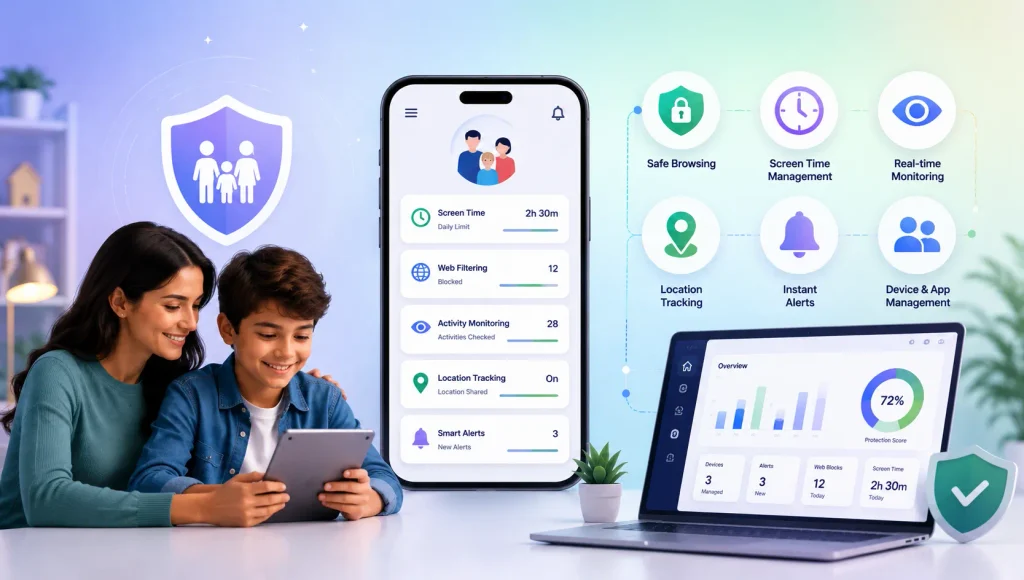
- Screen Time Tracking — Accurate, app-by-app reports of where your child’s time really goes, with daily, weekly, and monthly breakdowns. No more debates.
- App Blocking & Scheduling — Block individual apps with one tap or restrict whole categories, with separate schedules for school days versus weekends.
- AI Screen Scanner — Automatically captures and analyzes screenshots to flag explicit visual content and other age-inappropriate imagery the moment it appears.
- Content Filtering — Block addictive infinite-scroll sites, adult content, and apps that drive compulsive use.
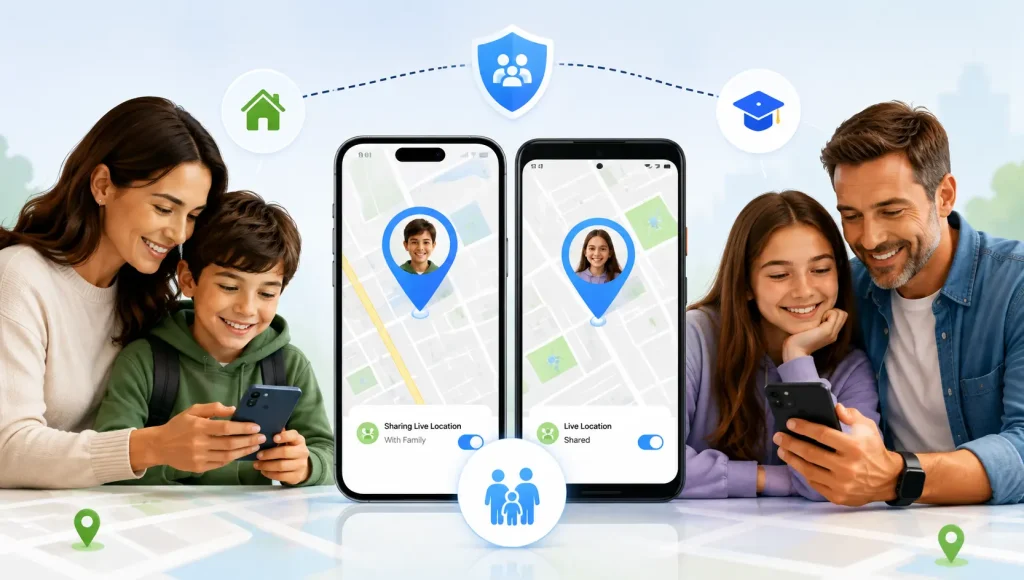
- Check-In Requests — Build trust with non-intrusive ways to confirm your child is where they should be, without constant texting.
If you’ve already tried Apple’s Screen Time or Google’s Family Link and your child has worked around them, you’re not alone — those tools weren’t built for kids who really want to bypass them. KidsNanny was.
The Bottom Line
Phone addiction in kids isn’t a moral failing or a sign you’re a bad parent. It’s the predictable result of giving developing brains tools that have been engineered for adult attention — and even adults are losing the battle.
The good news: phone-use habits respond remarkably well to structured intervention. With a few weeks of consistent practice, most kids show real improvement. Start with a conversation. Get accurate data. Set boundaries that include you, not just them. And use the right tools so the limits enforce themselves without making you the daily enemy.
Your child can have a healthy relationship with their phone. It just won’t happen by itself.