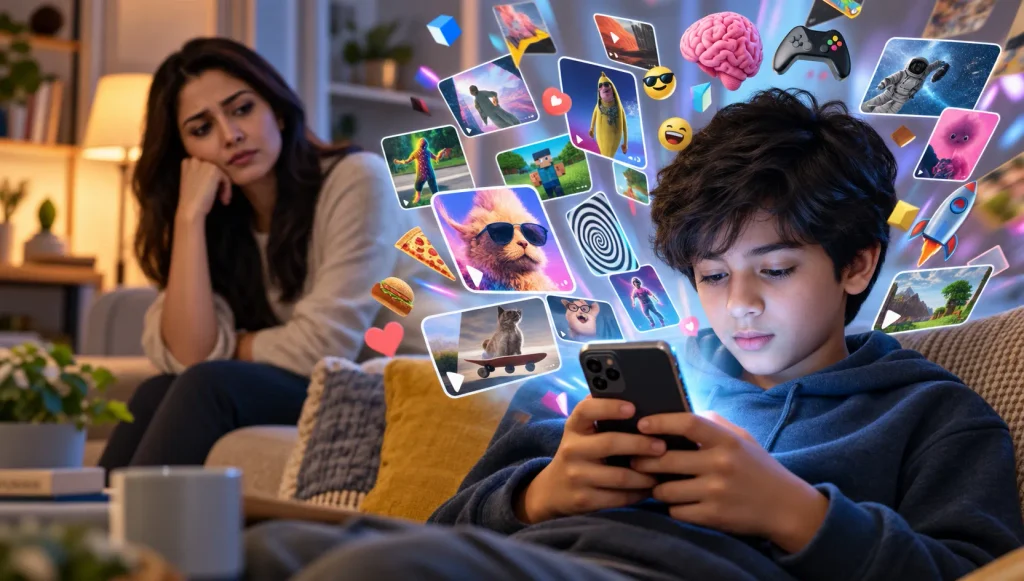



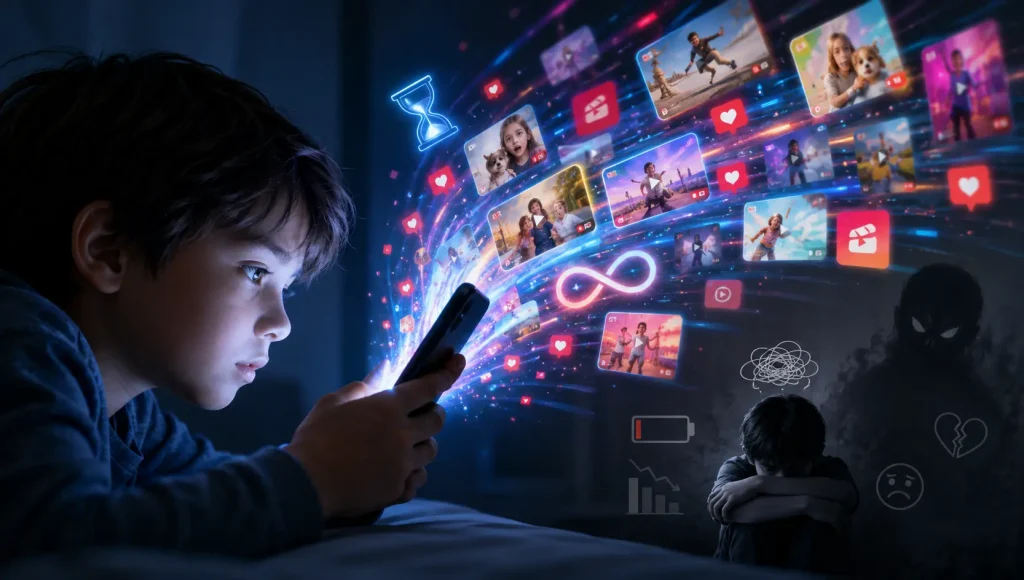
A few minutes on TikTok can quickly turn into an hour. The same happens on YouTube Shorts and Instagram Reels. Many parents have watched their children promise “just one more video” only to continue scrolling long after they intended to stop. This behaviour is not simply a matter of poor self-control — short-form video platforms are intentionally designed to capture attention and encourage continuous engagement. Families who are already working on healthy screen time habits for kids and teens often notice that endless-scroll feeds present a different kind of challenge than traditional apps or games.
Their endless stream of content, personalised recommendations, and rapid rewards tap into powerful psychological processes that influence how the brain responds to entertainment. Understanding why kids struggle to stop scrolling can help parents create healthier digital habits without relying solely on restrictions or punishment.
Why Short Videos Are So Appealing to Kids
Platforms like TikTok, YouTube Shorts, and Instagram Reels are built around one simple concept: deliver highly engaging content as quickly as possible. Unlike traditional television or long-form YouTube videos, short-form platforms provide:
- instant entertainment
- constant novelty
- personalised recommendations
- minimal effort from the viewer
Children and teenagers can consume dozens or even hundreds of videos in a single session without making any decisions beyond swiping their finger. This constant flow of new content keeps the brain engaged and curious about what might appear next.
The Role of Dopamine in Short-Form Video Addiction
One of the most discussed topics in digital psychology is dopamine — a neurotransmitter involved in motivation, learning, reward, and pleasure. Many people describe dopamine as the brain’s “feel-good chemical,” but neuroscientists at the National Institute on Drug Abuse explain that dopamine is more closely connected to anticipation and reward-seeking behaviour than to happiness itself.
When children watch entertaining videos, the brain may release dopamine in response to enjoyable experiences. The cycle becomes especially powerful because kids never know exactly what the next swipe will bring — a funny clip, a sports highlight, a cute animal video, a gaming moment, or a surprise reward. This uncertainty increases anticipation and encourages continued scrolling.
The takeaway: Dopamine itself is not harmful. The challenge is that short-form feeds deliver frequent, unpredictable rewards — the exact pattern that pushes the brain hardest to keep seeking more.
The Brain Reward Loop: Why One More Video Never Feels Like Enough
One reason short-form content feels difficult to stop is the brain’s reward system. The cycle usually looks like this:
- Watch a video
- Receive entertainment or emotional stimulation
- Experience a reward response
- Swipe for another video
- Repeat — sometimes for hours
Behavioural psychologists, including researchers cited by the American Psychological Association, sometimes compare this process to a variable reward system. Unlike predictable rewards, variable rewards occur unpredictably — the next video might be boring, interesting, hilarious, surprising, or emotionally engaging. Because users never know what comes next, they keep scrolling. The same mechanism appears in well-studied behavioural experiments where unpredictable payoffs encourage repeated behaviour far more strongly than predictable ones.
Why TikTok, YouTube Shorts, and Instagram Reels Feel Different
Short-form video platforms use recommendation algorithms that continuously learn from user behaviour. Every like, comment, share, pause, replay, and watch duration helps the platform predict what a user may want to see next. As a result, content often becomes increasingly relevant over time. According to research summarised by Common Sense Media, recommendation systems can significantly influence how long children and teens remain engaged on digital platforms. As algorithms become more accurate, many users report feeling as though the platform “knows exactly what they want to watch.”
How Short Videos Affect Attention Spans
Many parents worry that constant exposure to short videos may affect attention spans. Researchers are still studying the long-term effects, but experts generally agree that digital environments influence how attention is used and managed. Short-form content encourages:
- rapid information processing
- frequent switching between topics
- continuous novelty
- brief periods of focus
A child might watch a comedy clip, a soccer highlight, a science fact, a dance trend, and a gaming video all within a few minutes. Some researchers suggest that constantly shifting attention this way may make slower activities feel less stimulating by comparison. This does not mean short videos automatically cause attention disorders — but many experts recommend balancing short-form content with activities that require sustained concentration, such as reading, creative hobbies, sports, music practice, and problem-solving activities. Parents who already follow structured screen time routines tend to find it easier to protect time for these slower-paced activities.
What Is “TikTok Brain”?
You may have seen the term TikTok brain in news headlines. It is not a medical diagnosis, but a popular shorthand that researchers and journalists use to describe the cognitive changes that may follow heavy short-form video use — shortened attention spans, difficulty focusing on slower tasks, and a reduced tolerance for low-stimulation activities like reading or homework.
A 2021 paper published in NeuroImage linked problematic TikTok use to weaker self-control in young adults, and a more recent study published in Stanford’s Intersect journal found similar effects on sustained attention in high-school students. The takeaway is not that short videos “rewire” the brain overnight, but that hours of rapid, dopamine-driven content can quietly raise the bar for what feels engaging — making slower, deeper activities feel boring by comparison.
Why Kids Are More Vulnerable Than Adults
Children and teenagers are still developing important brain functions related to impulse control, decision-making, emotional regulation, and long-term planning. The prefrontal cortex, which helps regulate behaviour and decision-making, continues developing into early adulthood. Because of this, younger users may find it harder to stop engaging with rewarding digital experiences. The American Academy of Pediatrics emphasises that children often need guidance and support while developing healthy digital habits.
Signs That Scrolling May Be Becoming Unhealthy (Doomscrolling Warning Signs)
Parents should not assume every child who enjoys TikTok or YouTube Shorts has a problem. However, warning signs of what’s often called doomscrolling — when scrolling tips from entertainment into compulsive territory — may include:
- difficulty stopping when asked
- loss of interest in offline activities
- reduced sleep
- increased irritability when devices are removed
- excessive screen time
- declining school performance
These behaviours may indicate that digital media is beginning to interfere with daily life. Parents who are already setting healthy screen time boundaries — or using a tool like KidsNanny’s Screen Scanner to see what their child is actually viewing — often find it easier to recognise these patterns early, before they become entrenched habits.
The Hidden Connection Between Short Videos and Social Media Pressure
Short-form video platforms are not only entertainment platforms — they are also social environments. Many children feel pressure to gain views, earn likes, follow trends, and create viral content. This can contribute to social comparison and self-esteem challenges. Some teens respond to these pressures by creating secret social media accounts that allow them to share content with a smaller audience and escape the expectations of their public profiles.
For families dealing with broader online-pressure issues, it can also help to understand how cyberbullying affects kids and teens, because the same comparison-driven environments that encourage viral content can amplify hurtful interactions.\
Can Short Videos Have Benefits?
Yes — not all short-form content is harmful. Educational creators now use TikTok, YouTube Shorts, and Instagram Reels to teach science, history, language learning, study skills, and health information. Short videos can introduce new ideas, inspire creativity, provide entertainment, and support learning. The goal is not eliminating short-form content completely. The goal is helping children develop a healthy relationship with it.
How to Help Your Child Stop Scrolling: 5 Practical Steps for Parents
1. Focus on Balance, Not Bans
Strict bans often create conflict. Instead, focus on helping children balance entertainment, schoolwork, sleep, physical activity, and family time.
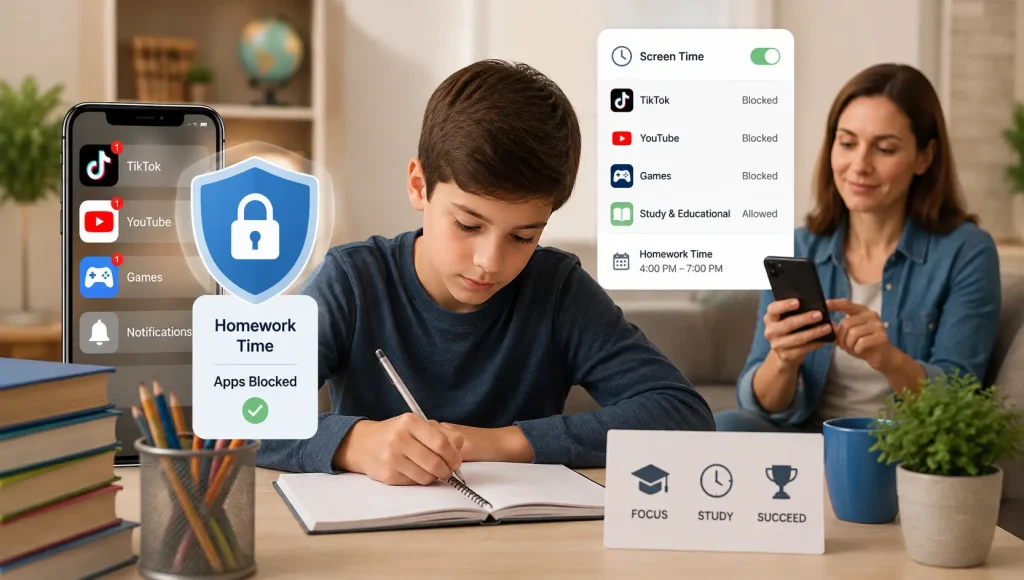
2. Create Screen-Free Periods and Use Built-in Controls
Consider device-free meals, screen-free bedrooms, family activity time, and homework-first routines. The Harvard Graduate School of Education has published useful guidance on building digital wellbeing routines that fit different family structures.
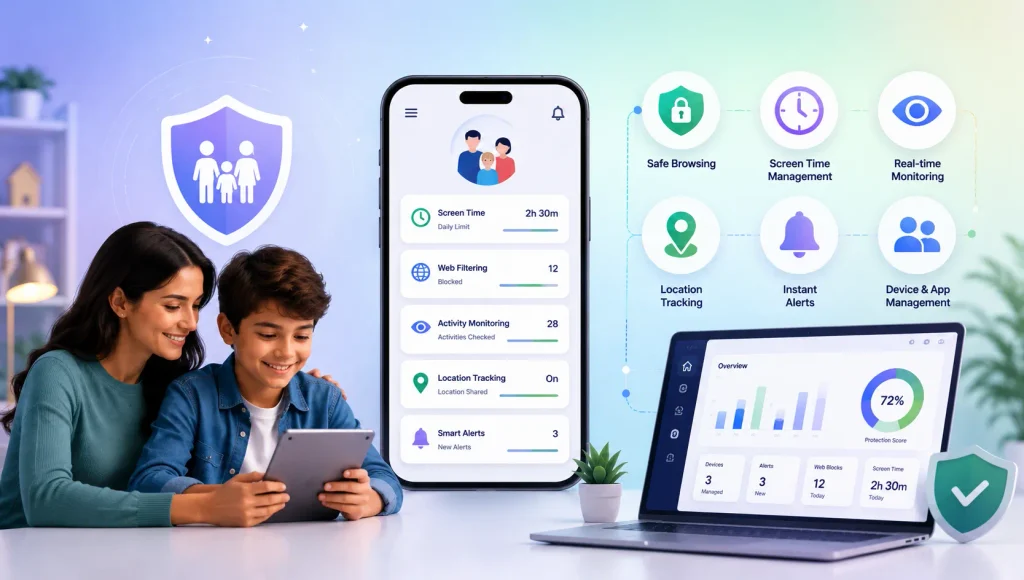
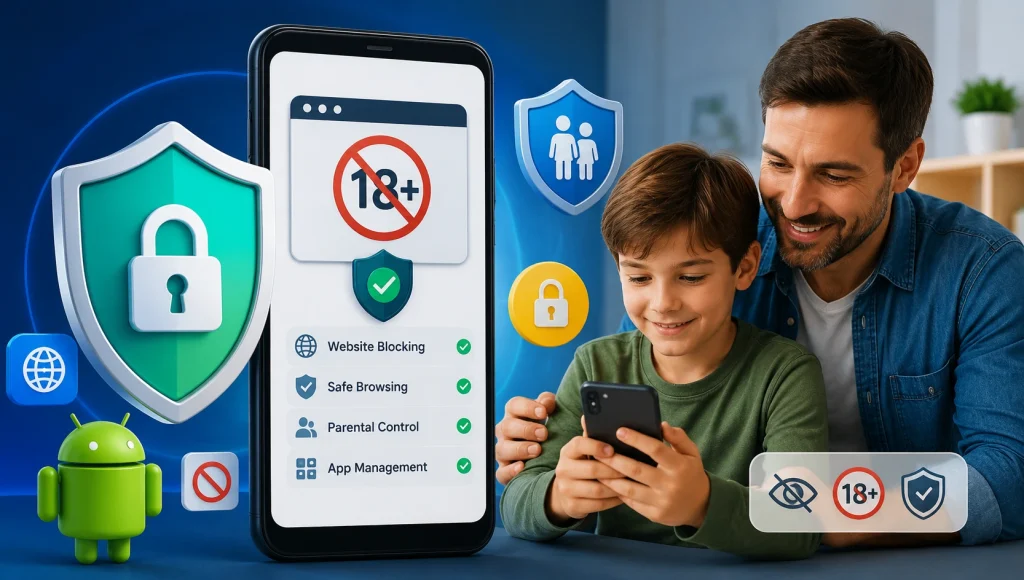
Most short-video apps also include their own parental tools — for example, TikTok’s Family Pairing lets parents link their account to their child’s and set daily time limits, restricted mode, and hard-stop bedtime windows. YouTube and Instagram offer similar supervision options. For more consistent control across every app on the device, families often combine these with a comprehensive solution like KidsNanny’s screen time management, which works the same way on Android and iPhone.
3. Talk About Algorithms
Children should understand that platforms are designed to maximise engagement. Teaching kids how recommendation systems work helps them become more mindful consumers, and pairs well with broader conversations about anonymous chat apps and privacy, which raise many of the same questions about how online environments shape behaviour.
4. Encourage Long-Form Activities
Activities that support sustained attention include reading, drawing, puzzles, sports, music, and creative projects. These experiences exercise different cognitive skills than rapid scrolling.
5. Teach Digital Literacy
Children should learn how algorithms work, how attention is monetised, why platforms encourage engagement, and how to recognise unhealthy usage patterns. As AI-powered recommendation systems become more common, parents may also benefit from understanding broader digital safety topics — including protecting kids from ChatGPT and AI tools, which explores how emerging technologies influence children’s online experiences.
Final Thoughts
TikTok, YouTube Shorts, and Instagram Reels are incredibly effective at capturing attention because they tap into natural psychological processes involving dopamine, reward anticipation, novelty, and curiosity. For children and teenagers, whose brains are still developing, these systems can feel especially compelling.
Short-form videos are not inherently harmful, but understanding how they influence behaviour helps parents make informed decisions about screen time and digital wellbeing. The most effective response is not fear or panic — it is education, communication, balance, and helping children develop healthy digital habits that will serve them throughout their lives. Parents looking for the next step can explore our guide to AI chatbot safety for children to understand how AI-powered tools are reshaping online experiences for young users.