




It’s the question every parent faces sooner or later: “When should I give my child a phone?”
Your child says everyone in their class already has one. You want them to be safe when they’re away from home. But you’ve also heard concerns about screen addiction, cyberbullying, and online risks.
So what’s the right age? The answer isn’t a single number—it depends on your child, your parenting style, and how well you prepare them. However, research and expert recommendations can guide your decision.
What the Experts Recommend
1. American Academy of Pediatrics (AAP)
The AAP has not set one specific age for smartphone ownership. Instead, they recommend parents create a Family Media Plan that considers each child’s maturity, needs, and family values.
Their general screen time guidance:
- Under 18 months: Avoid screens (except video calls).
- Ages 2–5: Max 1 hour/day (high-quality content).
- Ages 6+: Set consistent limits on time and content types.
The AAP emphasizes that readiness matters more than a fixed age. Dr. Jenny Radesky, a lead author of AAP screen time guidelines, has said the key question is whether a child has the self-regulation skills to manage a device — not simply how old they are.
2. Common Sense Media
Common Sense Media advises that most children are not ready for a smartphone before middle school (around age 12-13). They recommend parents evaluate readiness based on responsibility, maturity, and actual need rather than peer pressure.
3. Wait Until 8th Movement
The Wait Until 8th pledge encourages parents to delay smartphones until at least 8th grade (around age 14). The pledge activates when at least 10 families in a child’s grade and school sign up, so no child feels left out.
4. Jonathan Haidt — The Anxious Generation
In his 2024 bestselling book The Anxious Generation, social psychologist Jonathan Haidt proposes four norms for parents:
- No smartphones before high school (around age 14)
- No social media before age 16
- Phone-free schools
- More unsupervised, real-world play
Haidt argues that the period from 2010-2015 marked a “Great Rewiring of Childhood” as smartphones replaced play-based childhoods with phone-based ones. He documents sharp increases in anxiety, depression, self-harm, and suicide among adolescents — particularly girls — beginning around 2012-2013, coinciding with widespread smartphone adoption.
What the Data Shows
1. Average Age Kids Get Their First Phone
Research from Common Sense Media and industry surveys places the average age of first smartphone ownership in the US at approximately 10-12 years old — and the trend has been getting younger.
2. How Many Kids Have Smartphones?
- 95% of US teens (ages 13-17) have access to a smartphone
- Currently, 53% of children have a smartphone by age 11
The Mental Health Connection
The U.S. Surgeon General issued an advisory in May 2023 on social media and youth mental health, stating there is growing evidence that social media use is associated with harm to young people’s mental health.
Research by Dr. Jean Twenge (San Diego State University) documents sharp increases in depressive symptoms and suicidality among teens after 2012 — the same period when smartphone ownership became widespread among adolescents.
Important context: Much of this research is correlational, not definitively causal. Some researchers argue the effect sizes are modest. However, the cumulative weight of evidence has been enough for the Surgeon General, AAP, and multiple governments to issue warnings and take action.
Risks of Giving a Phone Too Early
1. Mental Health Impact
- Increased rates of anxiety and depression, particularly among girls who use social media heavily
- Body image issues driven by comparison culture on Instagram and TikTok
- Cyberbullying – research shows children with smartphones are significantly more likely to experience online harassment
- Addictive usage patterns driven by app algorithms designed to maximize engagement
2. Academic Impact
- A UNESCO report (2023) cited evidence that the mere proximity of a smartphone reduces cognitive capacity and working memory, even when the phone is turned off (based on research published in the Journal of the Association for Consumer Research).
- Schools that banned phones saw improvements in test scores, particularly among lower-performing students.
- Phones reduce focus—even when not used.
3. leep Impact
- A JAMA found that bedtime device use is significantly associated with poor sleep quality, inadequate sleep quantity, and excessive daytime sleepiness in children.
- Blue light from screens suppresses melatonin production.
- Engaging content (social media, games, messaging) causes cognitive arousal that makes falling asleep harder.
- Reduced sleep duration.
4. Social Development
- Excessive screen time can displace face-to-face interaction critical for developing empathy, emotional regulation, and social skills.
- Children who spend more time on devices may have fewer opportunities for unstructured play, which is essential for healthy development.

Signs Your Child is Ready for a Smartphone
Instead of focusing only on age, experts recommend evaluating these readiness indicators:
- Responsibility: Can your child keep track of their belongings? Do they follow household rules consistently? A child who regularly loses things or ignores rules may not be ready for an expensive device.
- Self-control: Can they stop using a tablet or TV when asked? Do they manage screen time well on existing devices? A child who already struggles with screen limits will likely struggle more with a smartphone.
- Understands risks: Do they understand that digital content is permanent? Can they grasp concepts like cyberbullying, privacy risks, and the danger of sharing personal information with strangers?
- Practical Need: Is there a genuine safety reason? Common scenarios include walking to school alone, commuting on public transit, split-custody logistics, or after-school activities where a parent needs to reach them.
- Willingness to Follow Rules: Are they open to following a family phone agreement? Will they talk to you about what they encounter online? Open communication is the single most important factor.
When You Do Give Them a Phone: How to Keep Them Safe
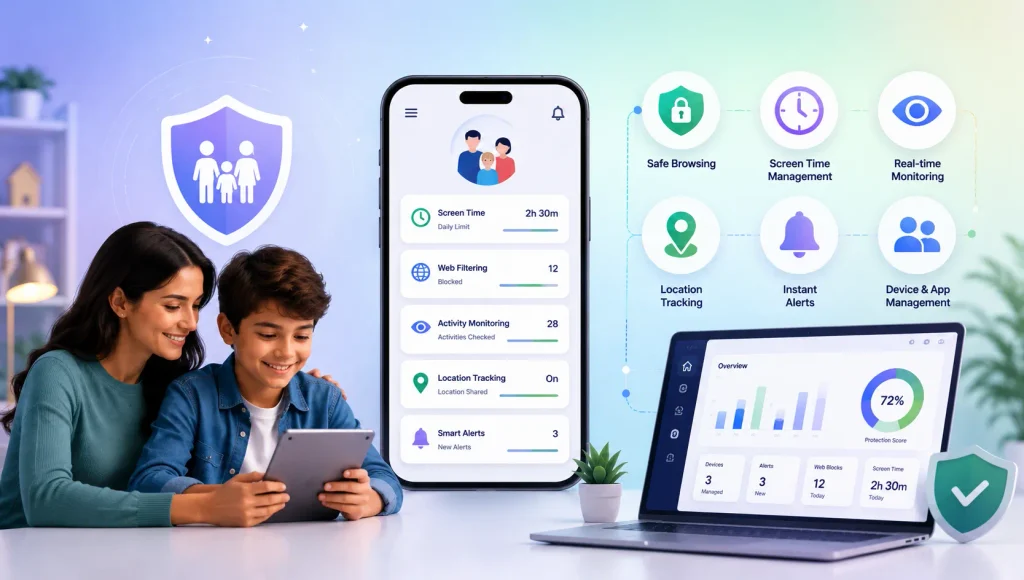
1. Install a Parental Control App Before Handing Over the Phone
Set up KidsNanny before your child starts using the device. This ensures monitoring and protections are in place from day one — not after a problem occurs.
2. Set Screen Time Limits
Use KidsNanny’s Screen Time management to establish daily limits, schedule device bedtimes, and prevent late-night usage that disrupts sleep.
3. Block Inappropriate Content
Enable Content Filtering to block harmful websites by category. Turn on Safe Browsing to filter search results across Google, YouTube, and Bing.
4. Monitor Apps and New Downloads
Use App Blocking to restrict dangerous apps like anonymous messaging platforms, random video chat apps, and vault apps. Get alerts when new apps are installed.
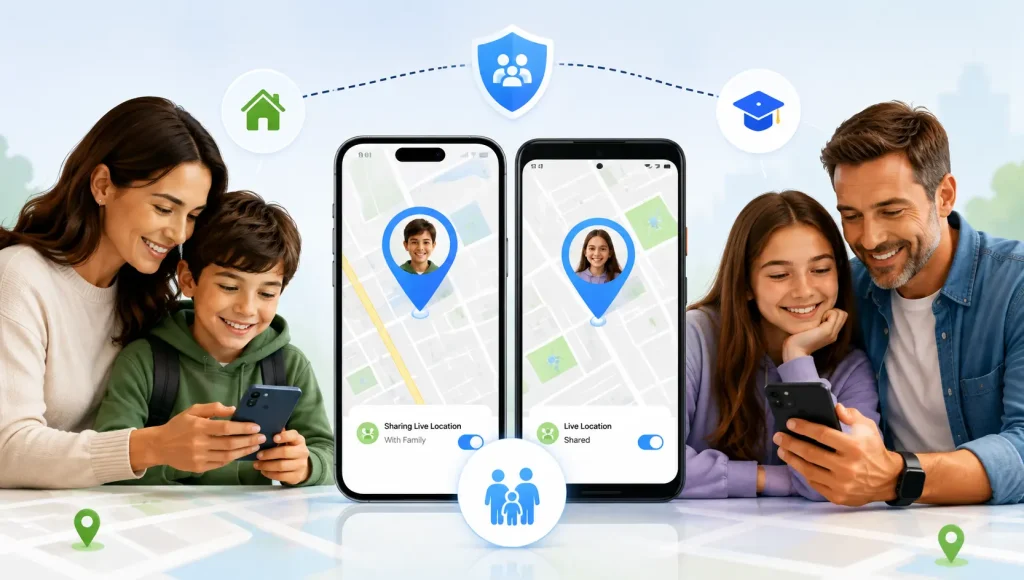
5. Enable Location Tracking
Activate Live Location tracking with geofence alerts so you know when your child arrives at or leaves school, home, or other safe zones.
6. Turn On AI Screen Scanning
KidsNanny’s Screen Scanner uses on-device AI to detect explicit content, grooming language, cyberbullying, and harmful material across all apps — and alerts you in real-time.
7. Create a Family Phone Agreement
Before giving the phone, sit down together and agree on rules:
- When and where the phone can be used (not at dinner, not after bedtime).
- What apps are allowed.
- That you will have the password and can check the phone.
- That they will come to you if something scary or uncomfortable happens online.
- Consequences for breaking the rules.
Write it down and have everyone sign it. This sets clear expectations from the start.
8. Keep Communication Open
Technology alone cannot keep your child safe. The most important protection is a relationship where your child feels safe telling you when something goes wrong online. Never punish a child for coming to you with a problem — that ensures they won’t come to you next time.
The Bottom Line: There Is No Perfect Age
There is no single “right age” to give your child a smartphone. But based on expert consensus and research:
- Ages 5–9: Too early for a smartphone. Use a GPS watch if you need to stay in touch.
- Ages 10–12:Consider a kid-safe phone if there’s a practical need. If you choose a smartphone, KidsNanny and set strict controls before handing it over.
- Ages 13–14: This is when most experts say children may be ready — with parental monitoring, screen time limits, and open communication in place.
- Ages 15–16: Gradually expand access and trust as your child demonstrates responsible use.
The phone itself is not the enemy. An unmonitored phone is. Whatever age you choose, make sure your child has the support, boundaries, and protection they need to navigate the digital world safely.