


If your child suddenly starts saying things like “skibidi,” “sigma,” “rizz,” “6-7,” or other phrases that seem to make absolutely no sense, you are not alone.
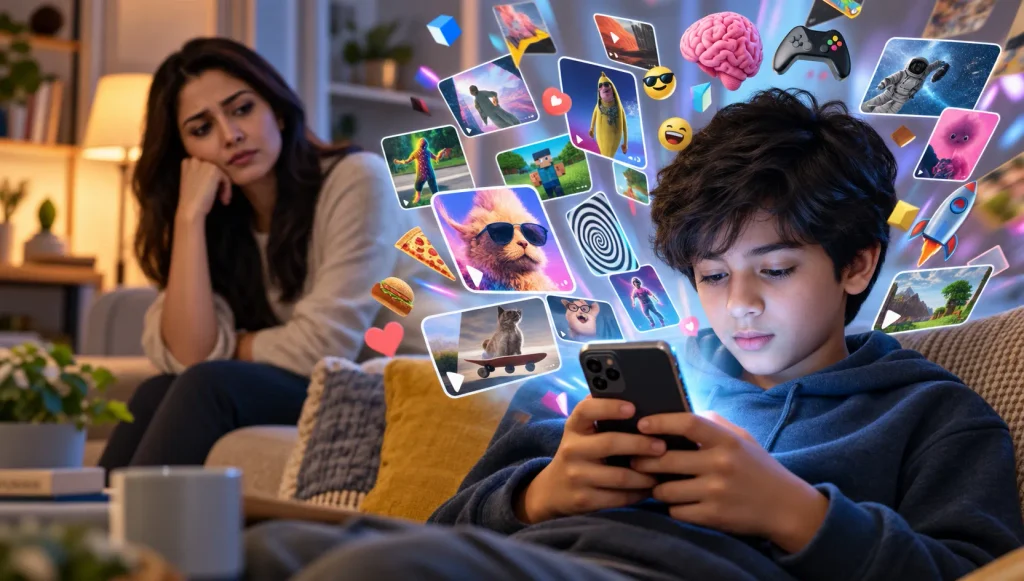
You may have also noticed your child watching a constant stream of short videos, repeating sounds from TikTok or YouTube, talking about bizarre memes, or jumping from one viral trend to another.
Kids and teens often call this “brain rot.”
But what does brain rot actually mean? Is it just a funny name for internet slang, or should parents be concerned about what their children are watching?
The answer is more complicated than simply telling your child to get off their phone.
Brain rot is not a medical diagnosis or a literal condition that makes a child’s brain “rot.” Today, the term is commonly used to describe absurd, repetitive, low-value internet content and, more broadly, the feeling of being overwhelmed by constantly consuming online trends.
For parents, the more important question is not whether a child says “brain rot” slang. It is what they are watching, how much time they spend consuming it, what the algorithm keeps showing them, and whether online content is beginning to interfere with everyday life.
What Does “Brain Rot” Mean?
The term brain rot existed long before TikTok, YouTube Shorts, or Gen Alpha slang.
Today, however, children and teens commonly use it to describe bizarre memes, repetitive sounds, viral catchphrases, short videos, game-related jokes, AI-generated characters, and other internet trends that can spread extremely quickly.
Oxford University Press named “brain rot” its Word of the Year for 2024, reflecting the growing use of the phrase to describe concerns about consuming large amounts of trivial or unchallenging online content. The reasoning behind Oxford’s 2024 Word of the Year points to the growing cultural conversation around excessive consumption of low-value online content.
There is also an important distinction:
Brain rot can refer to the content itself, the culture surrounding that content, or the habit of endlessly consuming it.
A child repeating a funny meme once is very different from spending hours scrolling through increasingly stimulating videos every day.
Why Do Kids Like Brain Rot Content?
To adults, some brain rot content can look completely random.
To children, it can serve several purposes.
1. It helps them fit in
Kids use shared jokes, sounds, memes and slang to communicate with friends.
Knowing the latest trend can become a form of social currency. A child who understands the joke may feel like part of the group.
2. It is designed to be memorable
Short videos often rely on repetition, fast editing, surprising sounds, humor and visual changes.
That makes individual clips easy to remember and repeat.
3. Algorithms keep finding more
A child watches one video about a meme.
The platform recommends another.
Then another.
Then a slightly different version.
Before long, the child’s feed may contain hundreds of videos connected to the same trend.
Modern video platforms can recommend content, autoplay videos and rapidly switch between short-form clips. These features can encourage longer viewing sessions and make it harder for young users to stop scrolling. The American Psychological Association has specifically highlighted these platform features in its guidance on healthy teen video viewing.
4. Trends move incredibly fast
Internet slang no longer needs months or years to spread.
A sound, phrase, meme or character can move from one creator to millions of viewers and then into classrooms, group chats and gaming communities.
That is one reason parents can feel as if their child learns a completely new vocabulary every few weeks.
Brain Rot Examples Parents May Hear About
Brain rot changes quickly, so today’s popular phrase may disappear tomorrow.
Some examples parents may encounter include:
- Skibidi — associated with the viral Skibidi Toilet phenomenon and often used in deliberately nonsensical ways.
- Rizz — slang associated with charm or romantic appeal.
- Sigma — often used ironically to describe someone as independent, impressive or “cool.”
- Aura — commonly associated with someone’s perceived confidence, presence or social status.
- Aura farming — deliberately creating a memorable or impressive image online.
- 6-7 / six-seven / 67 — a viral Gen Alpha expression that became especially widespread in 2025. Dictionary.com selected “67” as its 2025 Word of the Year.
- Italian brain rot — a collection of surreal, AI-generated characters and memes that spread across social platforms.
- Roblox brain rot — bizarre characters, items, phrases and memes associated with Roblox culture and viral gaming content. Parents should also understand the wider Roblox safety risks children can encounter while playing and chatting.
The important point for parents is that not every brain rot phrase is dangerous.
A child saying “6-7” or “sigma” does not automatically mean they are viewing harmful content. Context matters.
What Is “6-7” and Why Are Kids Saying It?
One of the clearest examples of how quickly internet culture can spread is “67,” also written as “6-7” or “six-seven.”
The expression became a major Gen Alpha trend during 2025 and was selected as Dictionary.com’s 2025 Word of the Year. Dictionary.com explains the meaning, origin and cultural impact of 67 (six-seven) in its announcement.
Its meaning is intentionally slippery.
Children may use it as a joke, an answer to a question, a reaction to seeing the number 67, or simply as a way of showing that they understand the meme.
That is part of what makes brain rot different from traditional slang.
Sometimes the shared joke is more important than the actual meaning.
For parents, this is a useful reminder: You do not need to panic every time your child repeats a strange internet phrase. Ask what it means and where they encountered it.
What Is Italian Brain Rot?
Another major development in online youth culture has been Italian brain rot.
These memes feature surreal AI-generated characters, often combining animals, objects, people or other unrelated concepts into bizarre images and videos.
Examples that have circulated online include names such as:
- Tralalero Tralala
- Bombardiro Crocodilo
- Ballerina Cappuccina
- Tung Tung Tung Sahur
- Chimpanzini Bananini
The strange visuals and repetitive names make this content particularly easy to remix and share.
But there is an important lesson here for parents: A funny-looking AI character does not automatically make the video child-friendly.
AI-generated content can contain unexpected language, disturbing themes, sexual references, violence, misinformation or other material that may not be obvious from a thumbnail.
Parents should evaluate the actual content rather than assuming that something is safe because it looks cartoonish.
Is Brain Rot Actually Bad for Kids?
This is where parents need some nuance.
Watching a funny meme does not mean your child’s brain is being damaged.
And using internet slang is not, by itself, a sign of an unhealthy digital life.
The concern is what happens when low-value or highly stimulating content becomes a large part of a child’s media diet.
The American Psychological Association notes that excessive video viewing is associated with issues including poorer sleep, distractibility, irritability and reduced time available for activities such as physical activity, hobbies and in-person social interaction.
The APA also emphasizes that content matters, not simply the number of minutes spent looking at a screen.
That distinction is important. Watching a 20-minute educational video is not necessarily equivalent to watching 20 minutes of rapidly changing, algorithmically recommended short videos.
The Bigger Problem May Be Endless Scrolling
The phrase “brain rot” can make the problem sound like the content itself. But for parents, the bigger issue may be the consumption pattern.
Short-form video platforms can make it extremely easy to continue watching: Watch → swipe → watch → swipe → watch → swipe.
There is no natural stopping point. The next video is already waiting.
And the next recommendation is selected based on what the child has previously watched, searched for, paused on or interacted with.
This is one reason parents may notice their child constantly switching between short videos. Learn why kids can’t stop scrolling and how short-form video can shape digital habits.
This can create a cycle where a child keeps consuming increasingly similar content without actively deciding what they want to watch.
The American Psychological Association explains that many platforms can recommend content, rapidly switch between short-form videos and autoplay videos, while AI systems can analyze viewing behavior to influence future recommendations.
The APA’s recommendations for healthy teen video viewing also encourage parents to help teenagers understand how algorithms, artificial intelligence and editing techniques can shape the content they see, and to support more thoughtful video consumption.
Brain Rot vs. Harmful Online Content
One of the most important things parents should understand is that brain rot and harmful content are not the same thing.
| Type of content | Usually a concern? |
|---|---|
| Silly meme | Usually low risk |
| Repeating a viral phrase | Usually low risk |
| Funny gaming joke | Usually low risk |
| Excessive short-video scrolling | Worth monitoring |
| Content designed to shock or provoke | Pay attention |
| Sexual or explicit content | Safety concern |
| Violent or disturbing content | Safety concern |
| Bullying or humiliation videos | Safety concern |
| Dangerous challenges | Safety concern |
| Grooming or sexual solicitation | Serious safety concern |
| Drug or self-harm content | Serious safety concern |
| Scam or phishing content | Safety concern |
| Hate or extremist content | Safety concern |
| AI-generated sexual or deceptive content | Safety concern |
A viral meme can also become harmful when children use it to embarrass, target or humiliate someone. Cyberbullying can spread quickly through comments, private messages, group chats, memes and edited images.
This distinction can help parents avoid two extremes: “Everything online is dangerous.” and “It’s just brain rot, so it doesn’t matter.” Neither is particularly helpful.
When Should Parents Be Concerned About Brain Rot?
Look beyond the slang.
A child may simply be going through a phase if they repeat funny phrases with friends. However, it may be worth paying closer attention when you notice patterns such as:
- They struggle to stop watching short videos.
- They become upset when screen time ends.
- They regularly stay up late watching videos.
- Screen use replaces sleep, homework, exercise or hobbies.
- They constantly switch between videos without choosing what to watch.
- They become increasingly interested in shocking or inappropriate content.
- They repeat sexual, violent or hateful phrases without understanding them.
- They hide what they are watching.
- They move between multiple apps to continue consuming similar content.
- Their mood changes noticeably after extended online sessions.
- They are interacting with strangers because of viral trends.
- They are participating in risky challenges to gain views or attention.
These signs do not automatically mean something is seriously wrong.
They are signals to look more closely and start a conversation.
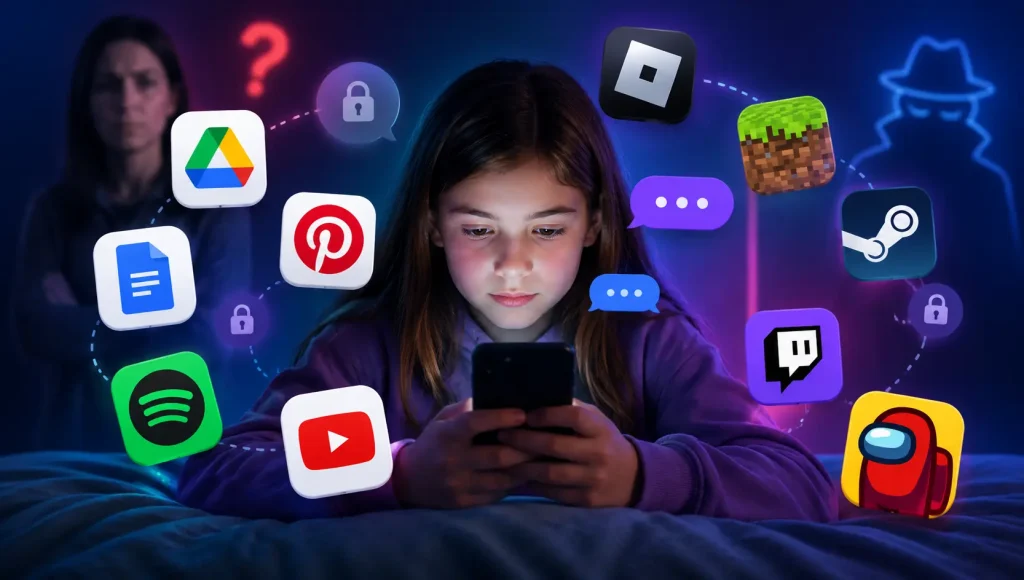
Brain rot trends can also introduce children to unfamiliar online communities. Anonymous chat apps can allow children to communicate with strangers, creating additional risks involving cyberbullying, grooming and inappropriate content.
Brain Rot and AI-Generated Content
There is another reason today’s version of brain rot is different from older internet memes.
AI can now create huge amounts of content extremely quickly.
Images, characters, voices, videos, music and stories can be generated, remixed and reposted at a scale that was not possible a few years ago.
That creates several challenges for children.
They may not know:
- whether a video is real or AI-generated;
- whether a character actually exists;
- who originally created the content;
- whether the information is true;
- whether a viral image has been manipulated;
- why a particular video keeps appearing in their feed.
AI-generated content can also create more serious risks for children. Learn more about AI-generated child abuse content and why parents should be aware of this emerging online threat.
The APA recommends helping teens develop stronger media literacy skills and teaching them to question AI-generated images and videos rather than automatically trusting what they see.
For parents, this means digital safety is no longer only about blocking bad websites.
Children also need to learn how to question what they see.
Some trends can also move from public feeds into private conversations. Hidden messaging apps and secret communication tools can make it harder for parents to understand who their child is talking to and what they are being exposed to online.
This is particularly important when children move conversations from public platforms into private communities. Discord, for example, combines text, voice and video communication with public and private communities, creating different safety considerations for parents.
How Parents Can Talk to Kids About Brain Rot
You do not need to understand every meme before talking to your child. In fact, asking your child to explain the trend can be a good starting point.
Try questions such as:
- “What does that mean?”
- “Where did you first see it?”
- “Is that a joke everyone at school knows?”
- “What happens in the videos?”
- “Does the app keep showing you similar videos?”
- “Have you ever seen something on there that made you uncomfortable?”
- “Why do you think that video keeps showing up?”
Avoid immediately mocking the trend.
For a child, the meme may be a way of connecting with friends. If parents dismiss everything as stupid or dangerous, children may become less willing to explain what they are actually seeing online.
The goal is not to understand every meme.
The goal is to make sure your child knows they can come to you when something online feels confusing, embarrassing or unsafe.
How to Help Kids Reduce Unhealthy Scrolling
You don’t necessarily need to ban every short-video app. Instead, create a healthier digital routine.
- Set clear screen-time boundaries – Set clear screen-time boundaries. Use specific periods for entertainment instead of allowing unlimited scrolling throughout the day.
- Create screen-free times – Meals, homework, family conversations and bedtime can be natural opportunities to put devices away.
- Protect sleep – Late-night scrolling can make it harder for children to maintain healthy sleep routines.
- Encourage active screen use – Watching a tutorial and then building something, learning a skill or creating a video can be more engaging than endlessly consuming recommended clips.
- Teach children how recommendations work – Help your child understand that their feed is not random. The content they watch and interact with influences what the platform recommends next.
- Watch together occasionally – Co-viewing gives parents a better understanding of what their child is actually seeing.
- Focus on content, not only minutes – Ask what your child is watching, who is creating it and how it affects them.
A Parent’s Brain Rot Safety Checklist
If your child spends a lot of time watching short-form videos, check these areas regularly:
Content:
- Is it age-appropriate?
- Does it contain sexual, violent or disturbing material?
- Does it promote dangerous behavior?
Time:
- Is entertainment replacing sleep or offline activities?
- Can your child stop without a major argument?
Algorithm:
- Does the feed keep recommending increasingly extreme content?
- Does your child understand why certain videos appear?
Communication:
- Will your child tell you when something makes them uncomfortable?
- Do you regularly talk about online experiences?
Privacy:
- Is your child sharing personal information?
- Are strangers contacting them?
- Are they moving conversations to private messaging?
Digital literacy:
- Can your child recognize AI-generated or manipulated content?
- Do they understand that viral does not mean true?
How Parental Controls Can Help With Brain Rot
Parents cannot—and should not—try to manually watch every video their child sees. Tools such as AI Screen Scanner can help parents identify potentially concerning content appearing on a child’s screen.
Technology can help with the parts of digital safety that are difficult to manage manually.
For example, parental controls can help parents:
- set screen-time schedules;
- limit individual apps;
- block distracting or inappropriate websites;
- restrict access during bedtime or school hours;
- review app usage;
- understand browsing activity;
- identify concerning online activity;
- receive alerts about potential safety risks.
But parental controls should work alongside conversation, education and healthy digital habits.
The goal isn’t to monitor every harmless meme your child watches.
The goal is to help parents recognize when ordinary internet culture crosses into excessive use, inappropriate content or a genuine online safety concern.
Brain Rot Isn’t the Enemy—Unhealthy Digital Habits Are
The internet has always created strange trends. Every generation has had songs, jokes, catchphrases and cultural references that made little sense to adults.
Today’s difference is the speed, scale and personalization of digital content.
A meme can reach millions of children in hours. An algorithm can continuously recommend similar videos. AI can generate new variations almost instantly. So don’t panic because your child says “6-7,” “sigma,” or another phrase you don’t understand.
Instead, pay attention to the bigger picture.
- What are they watching?
- How long are they watching?
- Why does the algorithm keep showing it?
- Is the content appropriate?
- Is it affecting sleep, school, relationships or offline activities?
And most importantly: Does your child feel comfortable coming to you when something online doesn’t feel right?
That is where digital safety begins.