



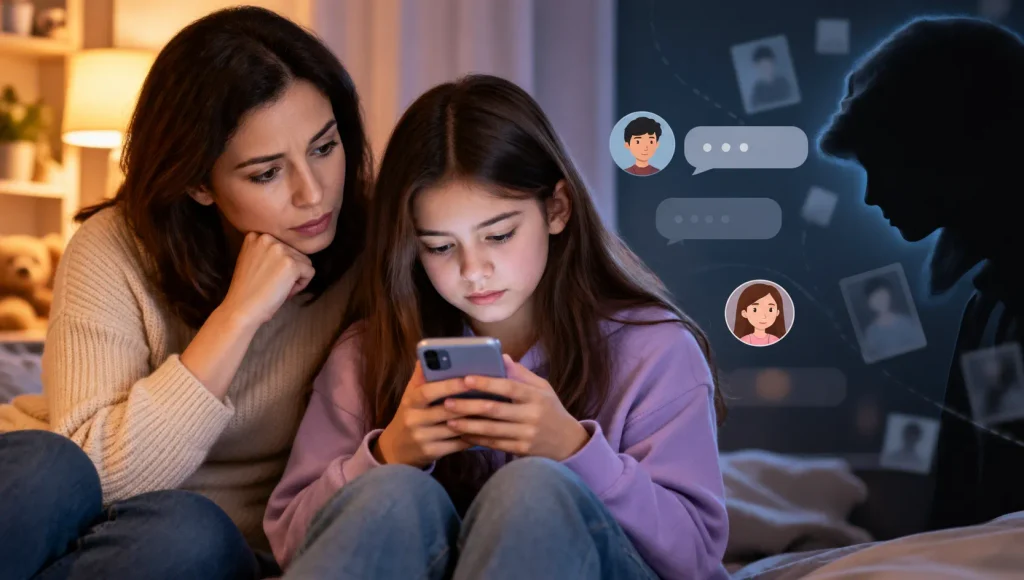
“My child has an online friend I’ve never met. Should I be worried?”
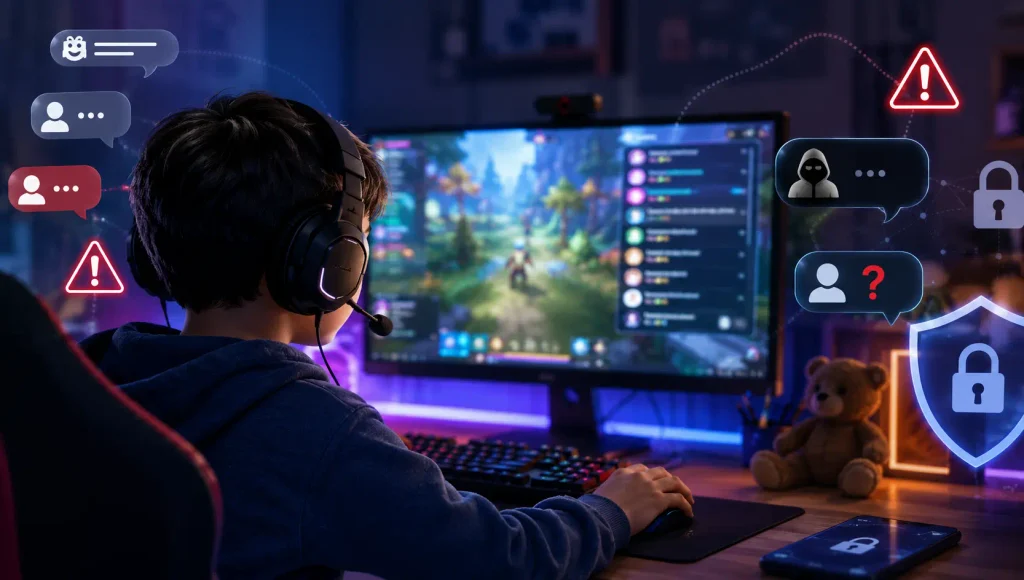
It’s a question many parents eventually face. Kids can meet people through online games, social apps, group chats, livestreams, and communities built around their interests. An online friendship isn’t automatically dangerous, but parents may not know who is really behind the account.
You don’t need to interrogate your child or ban every online friendship. Instead, a few calm questions can help you understand who your child is talking to, how the relationship developed, and whether any boundaries are being crossed.
1. How Did You Meet Them?
Start with the simplest question.
Ask your child how they met and what they have in common. Did they meet while playing a game? Through a shared interest? In online chat rooms or social communities?
Understanding how the relationship started can give you useful context without making your child feel like they’re in trouble.
2. What Do You Know About Them?
Ask what your child knows about their online friend.
Do they know their age? Where do they live? What school do they attend? Have they ever shared a photo or video?
Remind your child that an online profile doesn’t necessarily tell you who someone really is. People can use fake names, photos, ages, or identities online.
3. What Do You Usually Talk About?
Don’t focus only on whether the conversation is “good” or “bad.”
Ask what they normally discuss. Games, hobbies, school, music, and other everyday interests are very different from conversations that become overly personal, secretive, or sexual.
This is especially important when children use anonymous chat apps, where they may interact with people whose identities they cannot easily verify.
You can also ask whether the person has ever made your child uncomfortable.
4. Have They Ever Asked You to Keep Something Secret?
This is an important one.
A person who asks a child to hide conversations, gifts, messages, or their relationship from parents is crossing an important boundary. This can become harder for parents to recognize when children use secret social media accounts to communicate privately.
Teach your child that a safe online friendship shouldn’t depend on keeping secrets from trusted adults.
If your child says someone has asked them to keep a secret, stay calm and ask what happened rather than immediately blaming or punishing them.
5. Have They Ever Asked You to Move to Another App?
Online conversations can move quickly from a game or public community into private messaging.
Ask your child whether their online friend has suggested moving to another app, using a private account, turning off notifications, or using secret messaging apps.
Moving platforms isn’t proof that something harmful is happening, but it is worth understanding why the person wanted to move the conversation.
6. Have They Ever Asked for a Photo, Video, or Personal Information?
Your child should know that they never have to send something just because an online friend asks.
This includes:
- Photos or videos
- Home or school information
- Phone numbers
- Passwords or login details
- Location information
- Personal or family details
Pay particular attention if someone pressures your child, offers gifts or rewards, or becomes angry when your child says “no”.
7. How Do You Feel When You Talk to Them?
This question can reveal something that a simple review of messages may miss.
Ask whether your child feels comfortable, excited, pressured, worried, embarrassed, or afraid when talking to the person.
Sometimes a child knows that something feels wrong before they can explain exactly why.
Let them know they can always come to you if an online conversation makes them uncomfortable—even if they think they might get in trouble.
What If Your Child Says Everything Is Fine?
That’s okay.
You don’t need to turn every online friendship into an investigation. The goal is to keep communication open while helping your child understand healthy online boundaries. It’s also useful for parents to understand how online grooming and sextortion can develop through seemingly normal conversations.
You can agree on simple rules, such as:
- Don’t share private information.
- Don’t send intimate or uncomfortable images.
- Don’t meet an online contact in person without a parent or trusted adult involved.
- Don’t keep online relationships secret from parents.
- Tell an adult if someone makes you uncomfortable or pressures you.
These conversations are often more useful when they happen regularly rather than only after something goes wrong.
What If Something Doesn’t Feel Right?
If your child tells you that someone is pressuring, threatening, or sexually messaging them, take the situation seriously.
Stay calm and avoid blaming your child. Save relevant messages, usernames, profiles, and other evidence before blocking or deleting anything when possible. Report the account through the platform and seek help from the appropriate child-safety or law-enforcement service if there are threats, exploitation, or other serious concerns.
If intimate images of a child are involved, don’t forward or redistribute them. Follow guidance from the relevant authorities and reporting services.
Online Friends Aren’t the Problem—Unsafe Behavior Is
Children can build genuine friendships with people they meet online. The important lesson isn’t simply “never talk to strangers.”
It’s knowing what healthy boundaries look like.
An online friend should respect your child’s privacy, accept “no,” avoid secret-keeping, and never pressure them into sharing something they’re uncomfortable with.
As a parent, your job isn’t to know every message your child sends. It’s to make sure your child knows what to do when an online relationship starts crossing a line.
Keep asking questions. Keep the conversation open. And make sure your child knows they can come to you first.