


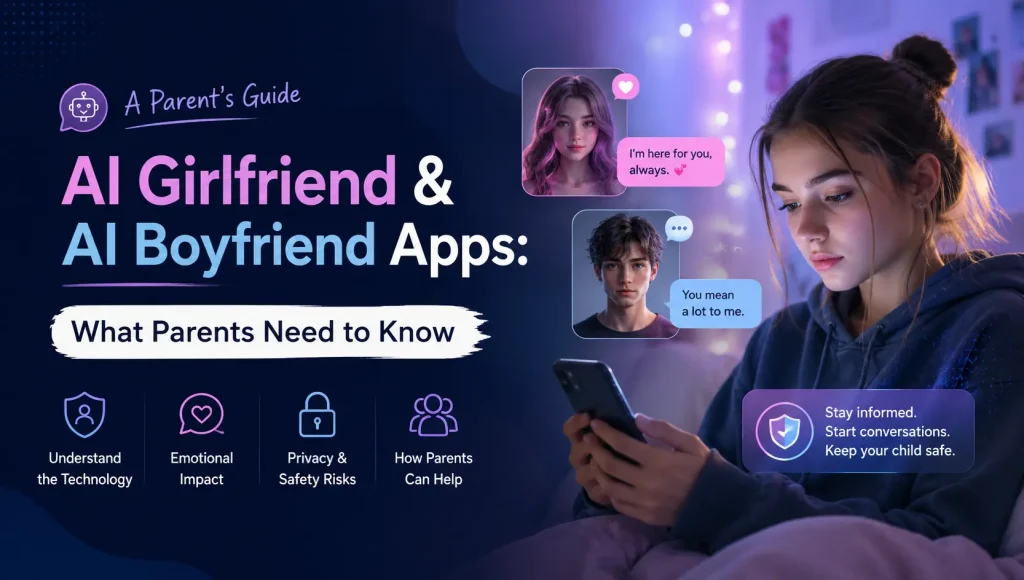
Artificial intelligence is changing childhood faster than most parents realize. What started as simple chatbots and virtual assistants has now evolved into something much more personal — AI girlfriend and AI boyfriend apps.
Millions of teenagers are now using AI companions for friendship, emotional support, roleplay conversations, and even romantic interaction. These chatbots are designed to feel human, remember conversations, respond emotionally, and stay available 24/7.
For many teens, these apps feel easier and less stressful than real-life relationships.
But researchers, child-safety organizations, and mental health experts are increasingly raising concerns about how emotionally immersive AI companion apps may affect teens.
In 2026, AI companion apps are becoming one of the fastest-growing digital parenting concerns families should understand.
What Are AI Girlfriend and AI Boyfriend Apps?
AI companion apps are chatbots designed to simulate emotional conversations and relationships.
Popular platforms include:
- Character AI
- Replika
- Nomi
- CrushOn AI
- Talkie
- Chai AI
These apps allow users to:
- create virtual companions,
- roleplay emotional conversations,
- receive affection and attention,
- build ongoing chat relationships,
- and interact with AI personalities that feel increasingly realistic.
Many teenagers use them for:
- curiosity,
- loneliness,
- entertainment,
- emotional support,
- or social interaction.
Some AI apps are specifically designed to encourage long conversations and emotional attachment.
Parents who are unfamiliar with these platforms should first understand how AI chatbots work and why teens are becoming emotionally connected to them.
If you are new to AI chatbot platforms, you may also want to read our related guide on Character AI safety and the real ChatGPT risks for teens.
Why Teens Are Using AI Companions
Teenagers today face:
- social pressure,
- loneliness,
- fear of rejection,
- anxiety,
- and constant online comparison through social media.
AI companions offer something many teens find emotionally comfortable:
- instant replies,
- constant attention,
- no judgment,
- and conversations available anytime.
According to research from Common Sense Media:
- 72% of teens have used AI companions,
- 52% use them regularly,
- and 33% use them for social interaction or relationships.
This shows AI companionship is no longer a small trend — it is becoming part of modern teen digital culture.
A report discussed by Scientific American also found that many teenagers are turning to AI chatbots for emotional comfort and personal conversations.
The Emotional Risks Parents Should Understand
1. Emotional Dependency
AI companions are designed to keep conversations going continuously.
Unlike real people, AI chatbots:
- never get tired,
- rarely disagree,
- and respond instantly.
Over time, some teens may become emotionally attached to these systems.
Researchers are studying whether heavy emotional reliance on AI companions could affect:
- social development,
- emotional resilience,
- loneliness,
- or real-world relationship skills.
A recent academic paper published on arXiv Research found that some adolescents using AI companion systems reported:
- emotional attachment,
- excessive usage patterns,
- sleep disruption,
- and reduced offline interaction.
Experts say more long-term research is still needed, but parents should stay aware of how emotionally immersive these apps are becoming.
2. Replacing Real Human Interaction
Real-world friendships and relationships help teenagers learn:
- empathy,
- communication,
- patience,
- conflict resolution,
- and emotional maturity.
AI relationships remove many of those real-life social challenges.
Because AI companions are designed to be agreeable and emotionally responsive, some teens may begin preferring AI conversations over difficult human interactions.
Child development experts warn that AI should never replace healthy real-world friendships, especially during important emotional development years.
3. Mental Health and Isolation Concerns
Some teenagers now use AI chatbots for emotional support instead of talking to:
- parents,
- friends,
- teachers,
- or trusted adults.
According to reporting from Associated Press:
- 31% of teens said conversations with AI companions felt as satisfying or more satisfying than talking to real friends,
- and many reported discussing serious personal issues with AI systems.
Mental health professionals caution that AI chatbots are not trained therapists and may sometimes provide unhealthy, manipulative, or emotionally misleading responses.
This is especially important for vulnerable teens struggling with:
- anxiety,
- loneliness,
- depression,
- or low self-esteem.
Privacy Risks Parents Should Not Ignore
Many parents assume AI companion apps are harmless entertainment tools.
However, researchers are increasingly warning about privacy concerns linked to AI chat platforms.
Some AI apps collect:
- chat histories,
- emotional conversations,
- personal details,
- usage patterns,
- and uploaded images.
According to reporting from Cybernews, researchers found that some AI companion apps had serious security weaknesses that could expose sensitive user information.
Teenagers may not fully understand how much private information they are sharing inside these conversations.
Parents should teach children:
- never to share personal photos,
- addresses,
- passwords,
- school information,
- or highly emotional private details with AI systems.
Why Parents Often Miss the Problem
Unlike social media apps, AI companion apps are often:
- quieter,
- more private,
- and emotionally hidden.
Many teens do not openly discuss them because:
- they feel emotionally attached,
- embarrassed,
- or afraid of losing access.
Some AI apps also market themselves as:
- friendship tools,
- emotional wellness apps,
- or entertainment chat platforms.
This makes the risks less obvious for families.
Parents already concerned about anonymous chatting and emotional manipulation should also read our related safety articles on:
- anonymous chat apps,
- online grooming,
- sextortion risks,
- and AI chatbot safety at KidsNanny Blog.
Warning Signs Parents Should Watch For
Parents should pay attention if a child:
- spends excessive time chatting privately,
- becomes emotionally upset when offline,
- hides chatbot apps,
- avoids real social activities,
- stays awake late using AI chats,
- or becomes unusually secretive about their phone.
These signs do not automatically mean something dangerous is happening, but they may indicate unhealthy digital dependency patterns.
How Parents Can Protect Teens
1. Start Calm Conversations
Avoid immediately shaming or punishing teens.
Instead ask:
- “What do you like about these apps?”
- “How do these conversations make you feel?”
- “Do you think AI relationships are different from real friendships?”
Open communication helps children feel safe discussing digital experiences honestly.
2. Learn Which Apps Your Teen Uses
Many parents have never heard of:
- Character AI, Replika, Talkie, Nomi, or Chai AI.
Understanding these platforms is the first step toward safer digital parenting.
3. Teach AI Literacy
Children should understand:
- AI is not human,
- chatbots are programmed systems,
- conversations may be stored,
- and emotional manipulation is possible.
Teens also need to understand that AI companions are designed to maximize engagement — not emotional wellbeing.
4. Encourage Healthy Offline Activities
Healthy offline life remains extremely important for teen development.
Encourage:
- hobbies,
- sports,
- family activities,
- creative interests,
- and real-world friendships.
The goal is balance — not fear.
5. Use Parental Control Tools
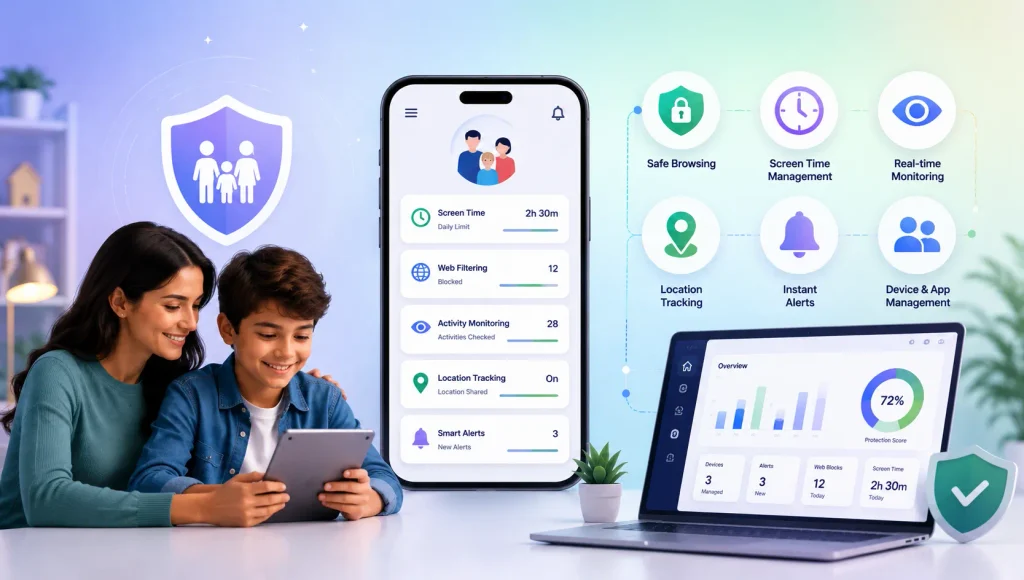
Parental control apps can help parents:
- monitor app installations,
- manage screen time,
- reduce late-night usage,
- and identify potentially risky apps.
Tools like KidsNanny Parental Control help families stay aware of emerging digital trends while supporting healthier online habits.
The Future of AI Relationships
AI companions are becoming:
- more realistic,
- more emotional,
- and more immersive every year.
Voice AI, emotional memory systems, and AI-generated avatars are rapidly improving.
Researchers, lawmakers, and child-safety organizations are now discussing:
- stronger age protections,
- AI safety rules,
- transparency requirements,
- and better safeguards for minors.
According to reporting from Reuters, regulators in multiple regions are already beginning to explore protections related to AI companion systems and minors.
Final Thoughts
AI girlfriend and AI boyfriend apps are no longer science fiction.
They are already becoming part of teenage digital culture.
While some AI tools may offer entertainment or temporary emotional comfort, experts increasingly warn that emotional dependency, privacy concerns, and social isolation may become risks when usage becomes excessive or emotionally unhealthy.
Parents do not need panic.
But they do need awareness, communication, and healthy digital boundaries.
The most effective protection is:
- staying involved,
- understanding new technology,
- teaching digital literacy,
- and maintaining open family conversations.
As AI becomes more personal, parenting must become more digitally informed too.