
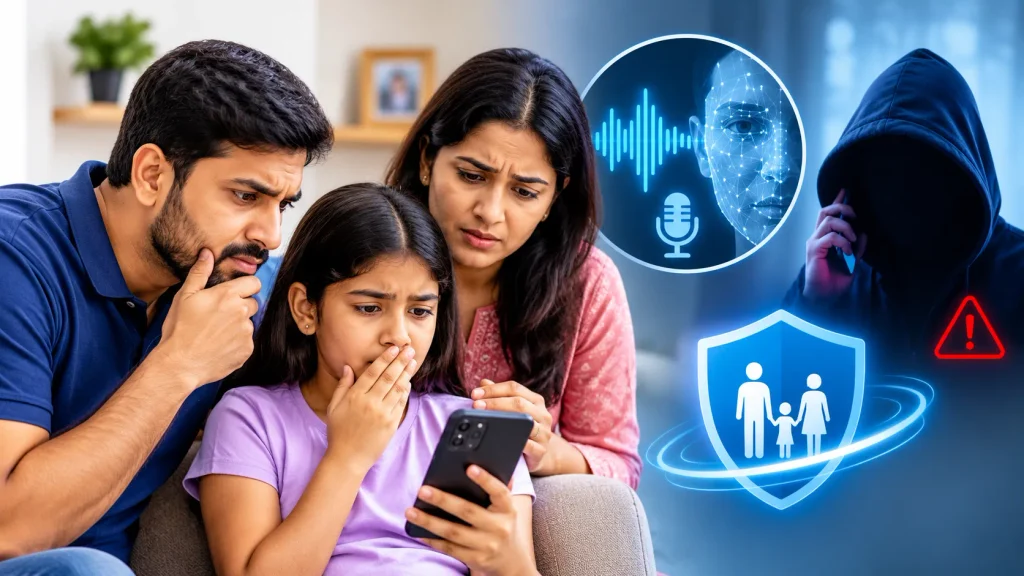
Imagine receiving a phone call from your child. Their voice sounds familiar, but they are frightened and urgently asking for help. They say they are in trouble and need money immediately.
Would you know whether it was really your child?
Artificial intelligence (AI) can now create convincing copies of a person’s voice using audio recordings. Scammers can misuse this technology to impersonate family members, create panic, and pressure people into sending money or sharing personal information.
For parents, understanding how these scams work is an important step toward protecting children and the entire family.
What Is an AI Voice Cloning Scam?
AI voice cloning uses artificial intelligence to imitate someone’s voice, including its tone and speaking style. A scammer may use a recording shared online or obtained elsewhere to create a synthetic voice that sounds like a real person.
The Federal Trade Commission (FTC) warns that scammers can use a short audio clip of a loved one’s voice to make a fake emergency call sound believable.
These scams are not limited to older adults. Children, teenagers, and parents can all be affected by impersonation attempts.
How Do Scammers Use AI to Impersonate Family Members?
A typical family emergency scam may follow these steps:
- Find a voice recording: A scammer obtains an audio clip from a public social media video or another source.
- Create a voice imitation: AI tools are used to generate audio that resembles the person’s voice.
- Invent an emergency: The caller claims that a family member has been injured, arrested, stranded, or is facing another urgent problem.
- Demand immediate help: The scammer pressures the recipient to send money, reveal personal information, or keep the situation secret.
The caller may also pretend to be a police officer, lawyer, or medical professional to make the story more convincing.
The most important warning sign is not the voice itself. It is the pressure to act without verifying what happened.
Warning Signs Parents Should Know
Teach children and family members to be cautious when someone:
- Claims a family member is in an emergency and needs immediate help.
- Demands money, gift cards, cryptocurrency, or payment through unusual methods.
- Insists that the conversation must remain secret.
- Requests passwords, verification codes, or personal information.
- Refuses to let the recipient verify the situation independently.
Remember: caller ID can be spoofed, and a familiar-sounding voice is not proof of identity.
5 Ways to Protect Your Family From AI Voice Cloning Scams
1. Create a Family Safe Word
Choose a private word or phrase that family members can use to verify their identity during an unexpected emergency call.
The FBI also recommends creating a secret word or phrase with your family. Keep it private and avoid sharing it publicly online. A safe word is an additional verification step, not a guarantee against every scam.
2. Verify Before Sending Money
If someone claims your child or another relative is in trouble, pause before responding.
Hang up and call the person directly using a phone number you already know. If they do not answer, contact another trusted family member or friend.
Never rely only on the number that called you.
3. Teach Children to Pause and Ask for Help
Children should understand that they do not have to handle frightening calls or messages alone.
Teach them to:
- Avoid sharing personal information with unknown callers.
- Never send money or payment details without a parent’s approval.
- Tell a trusted adult immediately if someone claims a family member is in danger.
4. Be Careful About Public Audio and Videos
Review what your family shares publicly on social media. Public videos and voice recordings may provide material that scammers can misuse.
Consider limiting who can view your family’s posts and avoid sharing unnecessary personal details, such as travel plans or contact information.
5. Agree on an Emergency Verification Plan
Make a simple family plan for unexpected emergencies.
Keep trusted phone numbers accessible, agree to verify urgent requests through a separate communication channel, and remind everyone that it is okay to slow down—even when a caller sounds distressed.
What Should You Do If You Receive a Suspicious Call?
If you suspect an AI voice cloning scam:
- End the call without sending money or sharing information.
- Contact the family member directly using a trusted number.
- Reach out to another family member or trusted person if you cannot verify the situation.
- Save relevant call details or messages, if safe to do so.
- Contact your bank or payment provider immediately if money or financial information has already been shared.
- Report it to the Canadian Anti-Fraud Centre or, in the US, to the FTC at ReportFraud.ftc.gov. You can also contact your local police.
If there is a genuine immediate threat to someone’s safety, contact local emergency services.
Final Thoughts: A Familiar Voice Is Not Always a Trusted Voice
AI voice cloning is a reminder that online safety is about more than protecting passwords and limiting screen time. Children and parents also need to understand how digital content can be manipulated and how scammers use fear to influence decisions.
The best protection starts with a simple family habit: Pause, verify, and talk to someone you trust before acting on an unexpected emergency request.
A few minutes of verification can help protect your family from a costly mistake.