


It’s 7 PM on a weekday.
Your son is glued to YouTube, your daughter insists she can’t finish homework without her phone, and the TV remote has mysteriously disappeared again. You remind them about responsibilities… and suddenly you’re the “strict” parent.
Sound familiar?
You’re not failing — you’re just missing a clear family framework that helps children understand expectations without daily arguments.
And in a world where screens compete for our children’s attention 24/7, house rules are no longer optional — they’re essential.
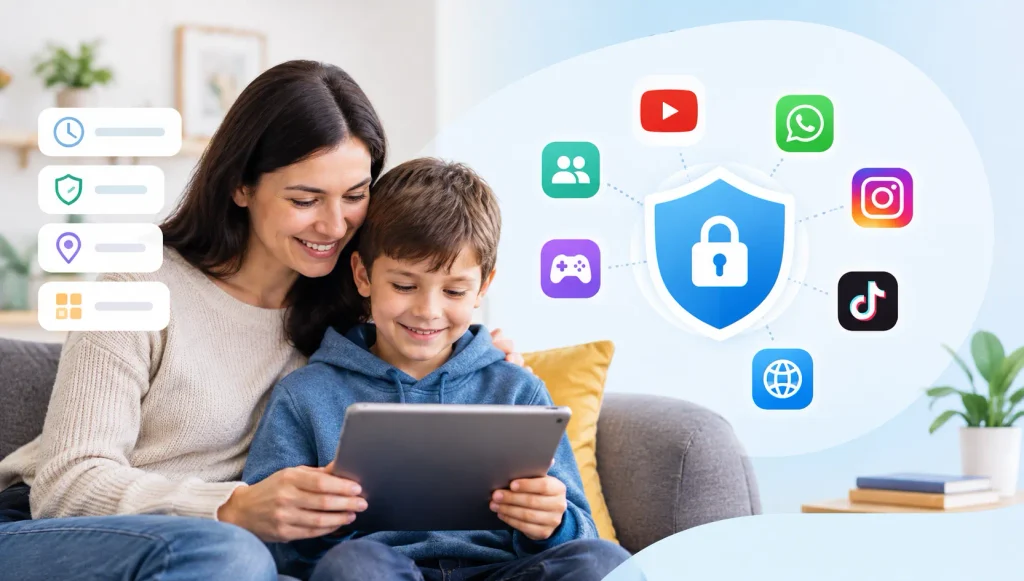
Let’s explore how to build healthy routines, set screen time rules, and use tools like KidsNanny, a safest parental control app, to bring peace and structure back into your home.
Why House Rules Matter More Today Than Ever
Children naturally push boundaries — not because they’re “naughty,” but because they’re learning how the world works.
Think of house rules as the digital-age playground fence: They keep kids safe, stable, and confident enough to explore.
Well-defined rules help kids understand:
- What’s safe online and offline
- Why routines matter
- How to communicate respectfully
- When screen time is appropriate
- Why sharing personal information online is dangerous
Without these rules, kids feel uncertain, parents feel overwhelmed, and screens slowly take over family life.
Step 1: Start With a Few Clear and Practical Family Rules
You don’t need a 20-page rulebook.
Start with 3–5 essential rules that solve your biggest challenges:
- Is bedtime becoming late because of YouTube
- Are morning routines chaos
- Is screen time always a negotiation?
Identify the pain points — then create rules that reduce stress instead of increasing it.
Step 2: Get Kids Involved (Even the Little Ones)
Children follow rules more happily when they help create them.
Ask open questions like:
- “What will make our mornings easier?”
- “How can we make screen time fair?”
- “What rules help us stay safe online?”
This creates ownership, not resistance.
Step 3: Make Rules Age-Appropriate
A 5-year-old and a 15-year-old can’t follow the same guidelines.
For younger kids:
- Simple, short sentences
- Visual reminders
- Positive wording
- Concrete behaviors
- Example: “Use walking feet inside” (instead of “Don’t run”)
For teens:
- Reason-based rules
- More independence
- Negotiation on non-safety topics
- Example: “Finish responsibilities before entertainment”

Core Categories of Family Rules Every Home Needs
1. Safety Rules (Online & Offline)
In today’s world, safety means more than helmets and kitchen rules.
It includes digital safety, like:
- “Don’t share personal information online.”
- “Ask before downloading new apps.”
- “Use online platforms only in shared spaces.”
- “Tell a parent immediately if something online feels uncomfortable.”
Teach safety as empowering, not frightening.
Help kids understand: “Rules protect you — not limit you.”
2. Respect Rules
Respect is not automatic — it’s learned.
Examples of respect rules:
- “We speak with kindness.”
- “We knock before entering rooms.”
- “We listen without interrupting.”
- “Devices stay down when someone is talking.”
These tiny habits build strong emotional intelligence in children.
3. Responsibility Rules
Responsibility can be age-appropriate and simple:
For young kids:
- Put toys away
- Help set the table
- Keep school bag organized
For older kids/teens:
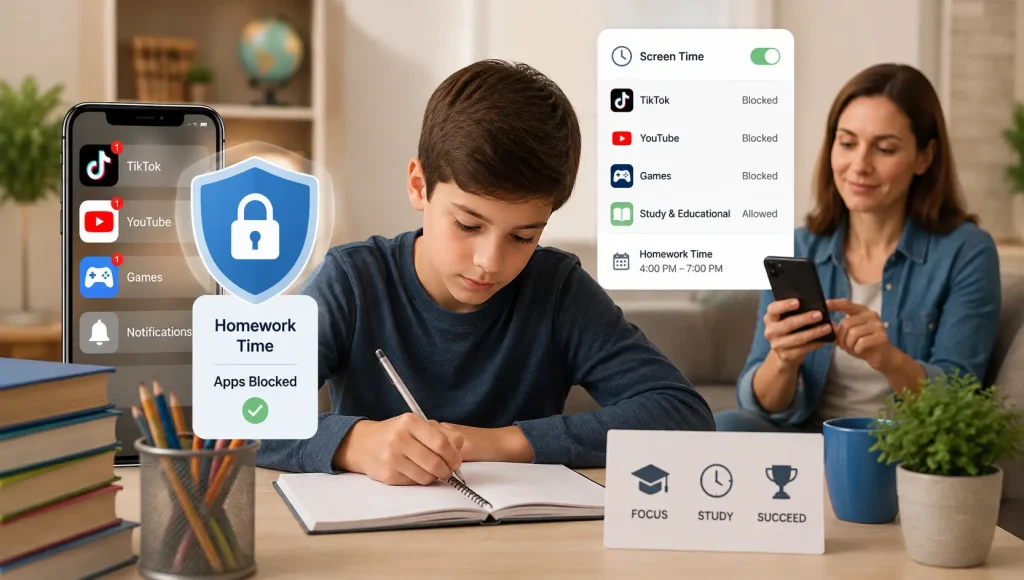
- Finish homework before screen time
- Manage school projects
- Contribute to household chores
- Plan bedtime routines independently
Small responsibilities today build capable adults tomorrow.
4. Screen Time Rules — The Most Important Category in the Digital Age
Let’s be honest: screen time is the #1 battle in modern parenting.
YouTube, social media, adults apps and endless online entertainment make it hard for kids to self-regulate.
Clear screen time rules prevent arguments like:
- “Just 5 more minutes!”
- “I need the phone for school!”
- “Everyone else is allowed, why not me?”
Smart Screen Time Rules Your Family Can Use
- Recreational screen time only after responsibilities.
- No phones during meals.
- Devices charge outside bedrooms.
- One hour of YouTube or gaming per day on weekdays.
- Parents approve all new apps.
- Tech-free family time every evening.
Step 4: Use Tools to Support the Rules — Not Replace Parenting
In today’s fast-paced world, monitoring screen time manually can feel impossible.
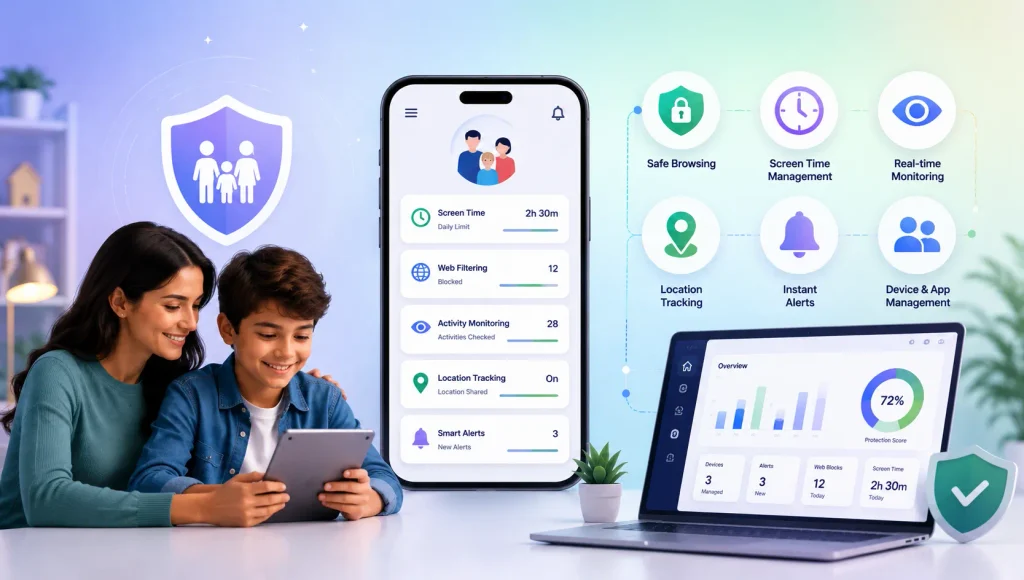
That’s where KidsNanny, one of the safest parental control apps, becomes your partner.
KidsNanny helps you:
- Set screen time schedules & Block apps – Limit YouTube, games, social media apps and adult apps based on your rules.
- Block harmful websites – Protect kids from age-inappropriate content.
- Monitor online activity – So you know what they’re watching, downloading, or searching.
- Track real-time location – Outdoor safety becomes effortless.
- Get instant alerts – If your child tries to access risky content or turns off their device.
KidsNanny doesn’t replace family rules — it enforces them consistently so you don’t have to repeat yourself 20 times.
Step 5: Use Visual Reminders
Kids forget what they only hear. They remember what they can see.
Create colorful charts for:
- Morning routines
- Chores
- Screen time schedules
- Homework habits
- Bedtime routines
This reduces arguments and increases independence.
Step 6: Consistency Is Your Superpower
Children thrive on predictable rules.
If screen time is limited today but unlimited tomorrow… You’ll always face pushback.
Consistency builds trust. Children feel more secure when expectations are stable.
Step 7: Use Consequences — Not Punishments
Healthy consequences teach accountability.
- Natural consequences: If they forget a coat, they feel cold.
- Logical consequences:If toys aren’t cleaned up, they rest for the day.
No yelling. No guilt. — Just lessons.
Step 8: Celebrate the Wins
If you want rules to stick, appreciate the effort.
Say things like: “I noticed you stopped YouTube when the timer ended. Great job!” Kids repeat what gets acknowledged.
The Most Important Rule: Be the Example
Kids copy what they see.
If you scroll Instagram during “device-free dinner,” they will too.
Model the rules you expect — especially:
- Respectful communication
- Screen time discipline
- Responsibility for chores
- Healthy digital habits
Even apologizing teaches them that mistakes can be repaired.
The Bottom Line: House Rules Help Families Thrive
House rules aren’t about restricting your child. They’re about giving them a safe, structured, and supportive environment where they can grow.
With clear expectations, consistent routines, and the help of a smart parental control app like KidsNanny, your family can:
- Reduce screen-time battles
- Build healthy digital habits
- Improve communication
- Monitor WhatsApp and other chat apps
- Strengthen responsibility
- Keep your child safe online and offline
- Enjoy more peaceful family moments
You don’t need perfection. You just need a plan — and you’re capable of building it.